Garage doors have become much safer than the heavy, manually operated systems installed decades ago. Today’s overhead doors use sensors, automatic reversing mechanisms, and specially designed hardware to reduce accidents and mechanical failures. Knowing how these features work helps homeowners recognize potential problems and understand which safety improvements are worth considering.
Photo-Eye Sensors Keep the Door From Closing on Obstacles
Photo-eye sensors sit near the bottom of the garage opening, usually no more than six inches above the floor. One sensor sends an infrared beam to the other, creating an invisible line across the doorway. If a person, pet, or object interrupts that beam while the door closes, the opener stops and reverses the movement.
Misalignment, dirty lenses, or damaged wiring can prevent the sensors from communicating properly. Indicator lights often reveal whether the beam remains connected. During garage door opener installation, technicians position and align these sensors according to manufacturer requirements, then verify their operation. Sensors provide protection near floor level, but they cannot detect every obstruction above the beam.
How Does Automatic Reversal Prevent Garage Door Injuries?
Automatic reversal provides another layer of protection when a closing garage door encounters resistance. Modern residential openers monitor operating force and respond when the door meets an unexpected obstruction. If the system detects excessive resistance, it should reverse direction instead of continuing to push downward.
A properly functioning opener must also pass a contact reversal test using the method specified by its manufacturer. Incorrect travel limits, excessive closing force, or worn mechanical components can interfere with this protection. Homeowners searching for a garage door repairman near me may need professional assistance when a door fails to reverse correctly. Increasing the closing force to overcome resistance can create dangerous operating conditions.
Pinch-Resistant Panels Help Protect Fingers
Traditional sectional garage doors can create narrow gaps between panels as the door bends around its tracks. Fingers caught in these openings may suffer serious injuries, particularly when someone grips the moving door near a hinge. Pinch-resistant panel designs reduce accessible gaps through specially shaped joints that change how adjoining sections meet.
These designs provide additional protection but do not eliminate every possible pinch point. Hinges, rollers, and track openings can still cause injuries during operation. Homeowners considering garage door installation can ask about panel construction and available finger-protection features, especially in households with young children.
Why Spring Containment and Cable Safety Matter
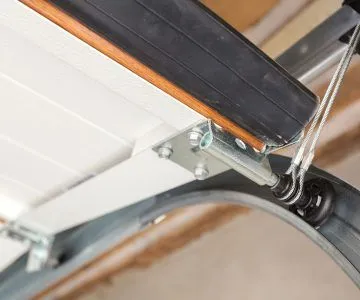
Garage door springs store substantial mechanical energy to counterbalance the weight of the door. Extension springs stretch during operation, while torsion springs twist around a shaft. If an extension spring breaks, its pieces can become dangerous projectiles unless a properly installed safety containment cable runs through the spring.
Torsion systems use a different arrangement, with springs mounted around a shaft. Their components still require secure mounting and correct sizing. Replacing garage door spring assemblies involves handling considerable stored energy, making professional service necessary. Technicians also inspect lift cables, drums, and bottom brackets because damaged components can cause sudden loss of support or uneven movement.
Manual Release Systems Provide Access During Power Failures
Automatic garage doors generally include an emergency release mechanism that disconnects the opener from the door. This feature allows manual operation when electrical power fails or the opener stops working. Residential systems commonly use a red release handle attached to the opener trolley.
However, releasing a door with broken springs or damaged cables can cause uncontrolled movement. The mechanism should only be used according to manufacturer instructions, preferably with the door fully closed and mechanically sound. An open door with a failed counterbalance system may fall once disconnected from the opener.
Rolling-Code Technology Adds Protection Against Unauthorized Access
Older garage door remotes sometimes transmitted fixed access codes that could be captured and reused. Modern rolling-code systems change the transmitted code after each authorized operation, making simple code replay attacks more difficult. This technology helps protect garages that provide direct access to homes or contain valuable belongings.
Wireless security features differ between manufacturers and opener models. Certain systems also offer smartphone notifications, activity logs, and temporary access permissions. These conveniences can help homeowners monitor garage access, although account security and proper remote management remain important. Lost remotes should be removed from the opener’s authorized device list.
Routine Safety Checks Help Identify Problems Before Accidents
Safety equipment needs periodic testing because sensors can shift, opener settings can change, and mechanical parts wear with use. Homeowners can visually inspect photo-eye lenses, observe door movement, and follow manufacturer instructions for checking the automatic reversal system. Frayed cables, broken springs, crooked panels, and unusual noises require professional attention.
A qualified overhead door company near me can perform a more complete assessment of the opener, tracks, counterbalance system, and protective hardware. Snappy Doors provides garage door repair, installation, and opener services throughout Huntsville and nearby Northern Alabama communities. Its technicians can inspect malfunctioning safety sensors, address mechanical problems, and help homeowners determine whether repairs or modern equipment upgrades would improve the safety of their overhead door systems.