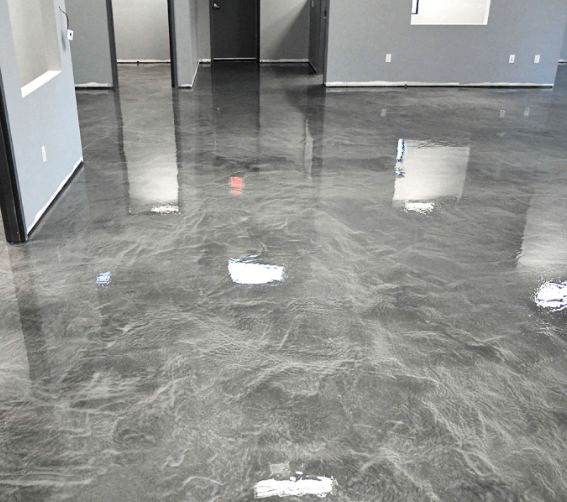
Loading docks and service areas put concrete through a mix of heavy traffic, impact, dirt, moisture, and chemical exposure. Commercial epoxy flooring can protect these spaces while making daily cleaning and maintenance easier. The right system depends on vehicle movement, equipment loads, drainage, surface condition, and how the area is used throughout the day.
Why Loading Areas Need More Than a Basic Floor Coating
Forklifts, pallet jacks, delivery carts, and loaded dollies place concentrated pressure on the same travel paths. Repeated turning creates extra abrasion, especially where hard wheels pivot near dock doors or staging zones. A thin coating may wear through quickly under that kind of traffic, while a properly built epoxy flooring system uses enough thickness and surface strength to spread wear across several bonded layers.
Service Bays Have Their Own Set of Flooring Problems
Vehicle service areas deal with more than rolling traffic. Motor oil, hydraulic fluid, coolant, brake cleaner, road salt, and other contaminants can land on the floor throughout a normal workday. Chemical resistance therefore becomes an important part of the coating specification.
Technicians also drop tools, jack stands, parts, and equipment. Impact can chip weak coatings or expose damaged concrete underneath. Property managers comparing epoxy floors near me should ask whether the system is designed for both chemical contact and repeated mechanical abuse rather than assuming one coating suits every commercial space.
Surface Preparation Determines How Well the System Holds Up
Diamond grinding removes weak concrete, old paint, curing compounds, and other material that can interfere with adhesion. Mechanical preparation also creates a surface profile that allows primer and epoxy to grip the slab instead of sitting on a smooth finish. Cracks, spalled edges, and damaged joints need separate attention before coating begins. Loading areas often have worn joint shoulders where wheels repeatedly cross from one slab section to another. Reliable epoxy floor companies repair those weak points first so the coating is not expected to hold broken concrete together.
How Much Traction Does a Busy Loading Zone Need?
Slip resistance becomes especially important near exterior doors, wash areas, ramps, and dock approaches. Rainwater, condensation, oil, and tracked-in debris can make a smooth surface harder to walk or drive across safely. Aggregate, quartz, or other traction media can be incorporated into the system to create more grip. Too much texture, however, can make cleaning harder. Deep profiles trap dirt and slow down mopping or machine scrubbing. Contractors installing commercial epoxy flooring balance traction with the maintenance routine, wheel type, slope, and likelihood of wet conditions so the surface remains practical as well as durable.
Heavy Rolling Loads Change the Required Coating Build
Warehouses and service facilities often have predictable traffic lanes. Forklifts may cross the same turns hundreds of times a week, creating concentrated abrasion that differs from general foot traffic. Those paths may call for a thicker body coat, aggregate reinforcement, or a harder protective finish. Different wheels create different stresses too. Steel, hard polyurethane, and small-diameter casters can put more pressure on the floor than larger rubber tires. Businesses searching for epoxy flooring near me should describe equipment weight, wheel material, turning zones, and loading patterns before selecting a system. That information helps installers avoid underbuilding a floor that looks good initially but wears early in high-use areas.
Drainage and Moisture Cannot Be Ignored
Loading docks often sit close to exterior weather, which means rainwater and humidity may reach the slab frequently. Service areas may also be washed down or exposed to melted snow, vehicle runoff, and cleaning water. Standing moisture can increase slip risk and place extra stress around cracks, drains, and floor transitions.
Moisture moving up through the slab creates a different problem. Vapor pressure beneath epoxy can lead to blistering or loss of adhesion if conditions exceed what the selected primer can handle. Installers may use in-slab testing before recommending the coating. Owners familiar with an epoxy garage floor near me search may recognize the same issue in residential garages, but large commercial slabs can have wider moisture variation from one zone to another.
Protective Topcoats Take the Daily Abuse First
Polyaspartic, polyurethane, or other compatible topcoats can protect the epoxy layers from abrasion, chemicals, stains, and routine cleaning. The final finish also affects gloss, traction, and how easily tire marks or spills are removed.
Selection should match actual operations. A service bay may benefit from stronger chemical resistance, while a loading area may need greater abrasion protection around dock entries and turning lanes. Elite Coastal Epoxy works with residential and commercial concrete finishes and can evaluate traffic, moisture, chemicals, surface damage, and maintenance needs before recommending a system. Their team can prepare the slab, repair worn areas, and build commercial epoxy flooring suited to the demands of active loading and service spaces.