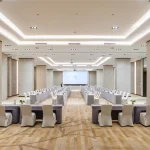

Look around any modern city or home, and you will see a world built on thousands of deliberate visual choices. From the soaring lines of glass skyscrapers to the carefully arranged items on our bookshelves and the entertainment we stream, human culture is defined by how we shape our surroundings. We naturally seek environments and objects that evoke a sense of order, wonder, and emotional comfort.
While it is easy to view separate creative industries as distinct and unrelated, true design mastery relies on a universal set of rules. The principles that make a physical space feel inviting are the very same principles that make a physical collectible feel alive, or a filmed scene feel deeply intimate. By exploring the common language of form, light, and material precision, we can uncover how modern aesthetics bridge the gap between imagination and physical reality.
1. Living Geometry: How Built Environments Influence the Human Mind
Architecture is often described as the most public of all art forms. Unlike a painting in a gallery or a book on a shelf, a physical building surrounds us completely. We do not simply look at spatial design; we inhabit it, walk through it, and breathe within its boundaries.
When a visionary architect outlines the plans for a new building, their primary concern goes far beyond structural integrity and load capacities. They are engineering an invisible emotional narrative for every person who steps through the doors. Consider the psychological impact of key spatial elements:
- Verticality and Volume: High ceilings invite expansive, creative thinking and convey a sense of freedom, whereas lower ceilings create cozy, protective enclosures ideal for quiet focus.
- Directional Sightlines: Strategic placement of windows and corridors guides the human eye toward natural landscapes or cityscape highlights, creating a constant dialogue between indoor and outdoor worlds.
- Material Touch: Incorporating raw, tactile surfaces like warm timber, polished marble, or unrefined slate adds a grounding, sensory layer to modern interiors.
In Japanese spatial tradition, this emotional narrative relies heavily on the concept of Ma—the art of purposeful empty space. A room is not considered finished when every corner is filled. Instead, leaving empty, uncluttered zones allows natural light, fresh air, and shadow movements to become active design elements, proving that restraint is often the highest form of sophistication.
2. Micro-Engineering: Capturing Form and Humanity in Scaled Objects
While large-scale structures deal with macro-geometry, high-end figure sculpting and modern product design focus on micro-precision. The human brain is remarkably perceptive; we can spot even the slightest imperfection in physical proportions, balance, or body language almost instantly.
Creating a detailed physical model—such as a fine collectible japanese doll or an intricate figurative sculpture—requires a profound blend of artistic talent and industrial engineering. Translating a fluid character concept into a stable, three-dimensional physical art object presents significant technical challenges.
Key Technical Phases of Miniature Fabrication
Stage
Specialty
Design Purpose
Anatomical Sculpting
Digital & Manual Modeling
Establishing natural physical posture and weight distribution
Tooling & Parting
Precision Steel Mold Making
Engineering complex figures into distinct parts for flawless casting
Polymer Formulation
Synthetic Material Science
Mixing resins that capture sub-millimeter details while resisting warping
Surface Painting
Multi-Layer Airbrushing
Applying gradual color shifts to recreate the realistic diffusion of light
Master sculptors face structural problems that mirror those in large-scale building construction. A dynamic pose with an off-center balance point must be carefully calculated so the internal structure supports the weight without sagging over time. Furthermore, sculptors must consider how light hits the synthetic material. Using semi-translucent resins allows light to absorb and scatter slightly below the surface, giving the object a soft, natural glow that looks remarkably lifelike under ambient room lighting.
3. Visual Staging: Constructing Depth on the Screen
Bringing physical depth into the world of film and visual media requires a different type of artistic discipline. A camera lens naturally flattens three-dimensional environments onto a two-dimensional plane. Without deliberate set design and calculated lighting, a recorded scene can easily look lifeless, shallow, and artificial.
In modern Japanese visual entertainment, from main-stage dramatic productions to specialized commercial AV media, spatial arrangement and light contrast are crucial for capturing viewer attention. Set directors do not simply place subjects in front of a camera; they construct a multi-layered visual world designed to draw the viewer’s focus and heighten visual presence.
Core Visual Staging Techniques
- Depth Separation: Placing interior props or architectural details in the near foreground to create clear distance between the camera, subject, and background.
- Chiaroscuro Lighting: Contrast-heavy lighting that blends soft key highlights with deep, rich shadows to reveal the true volume and curves of subjects on screen.
- Color Atmosphere Mapping: Combining warm, rich interior lighting on primary subjects with cool, ambient background tones to establish believable spatial depth.
When production teams master these techniques, the display screen ceases to feel like a flat barrier of pixels. Viewers are invited into the space, experiencing an immediate sense of atmosphere and intimacy that elevates simple video into captivating visual storytelling.
4. The Modern Synthesis: Crossing Boundaries Between Digital and Physical Art
We are currently living through a period of incredible technological fusion. The traditional walls separating building construction, miniature product fabrication, and visual media production are dissolving faster than ever before. Modern creators now use unified digital toolkits that allow artistic ideas to transition smoothly across multiple industries.
This digital crossover has opened exciting possibilities:
- Photorealistic Physics Engine Rendering: Lighting software can now model individual light rays as they interact with virtual building materials, allowing designers to test natural lighting setups long before physical construction begins.
- High-Resolution 3D Printing: Industrial resin printers allow character sculptors to take complex digital mesh files and create physical, hyper-detailed prototypes within hours.
- Real-Time Virtual Sets: Production studios can now shoot live camera footage in front of massive LED video walls that update digital backgrounds dynamically in real time to match camera movement.
This evolution does not diminish the value of traditional human skill. On the contrary, an artist who understands physical materials, real-world spatial balance, and natural lighting will always create superior work compared to an operator relying purely on automated algorithms. The tools change, but the core foundation of balance, proportion, and human-centric design remains timeless.
5. The Human Connection: Why Excellence in Design Matters
Why do human beings care so deeply about the finer details of our physical surroundings, our art objects, and the visual media we choose to watch? The answer lies in our fundamental search for beauty, harmony, and authentic connection.
In a fast-moving modern world filled with temporary, disposable content, things created with genuine discipline provide a much-needed sense of permanence and value. When we step into a thoughtfully designed building or hold a beautifully crafted art object, we naturally connect with key qualities:
- Intention: Knowing that every structural line, surface texture, and light angle was chosen for a specific reason.
- Proportion: The natural satisfaction we feel when viewing geometric relationships that mirror natural scales and visual rhythms.
- Tactility: The simple, authentic pleasure of touching high-quality surfaces—whether smooth natural hardwoods or soft, dense synthetic polymers.
Final Thoughts: Recognizing the Master Thread in Craftsmanship
At first glance, a soaring concrete building, an exquisite physical collectible, and a carefully lit visual production might seem like entirely separate worlds. Yet, when we look beneath the surface, we see that they are all branches of the same creative tree.
Architects, sculptors, and film directors are all ultimately manipulating the same fundamental elements: space, form, light, and human emotion. By learning to recognize these common threads, we develop a far richer appreciation for the constructed world around us. We begin to see that great design is not just about decorative style—it is about turning simple materials and visual moments into profound, lasting human experiences.