Protecting a vehicle’s interior is a practical concern that most truck and SUV owners eventually face. Whether hauling gear through muddy trails, commuting through wet winters, or managing a family vehicle that doubles as a weekend adventure rig, interior floor damage accumulates quietly until replacement becomes the only option. A well-chosen floor protection system changes that calculus entirely — extending the life of a vehicle’s carpet, preserving resale value, and reducing the time spent on interior maintenance.
Understanding the Market for Car Floor Liners
The automotive accessories market has matured considerably over the past decade, and nowhere is this more evident than in the segment dedicated to floor protection. Consumers shopping for car floor liners today encounter a wide range of materials, fit types, and price points — from budget universal mats to custom-molded thermoplastic liners engineered to match specific vehicle footwells down to the millimeter.
The key variables that analysts use to evaluate this product category include:
- Material durability — High-density polyethylene and thermoplastic elastomers outperform standard rubber in cold-weather flexibility and chemical resistance.
- Coverage area — Better products wrap up the sides of the footwell, not just the flat floor.
- Retention systems — Anti-shift clips and nibbed backing prevent the liner from migrating under driver foot pressure.
- Ease of cleaning — Smooth-channeled surfaces allow liquid and debris to consolidate rather than disperse.
The difference between a generic mat and a precision-fit liner becomes most apparent after six months of daily use in challenging conditions. Precision-fit products retain their functional geometry; universal mats tend to bunch, slip, and crack along fold lines.
Why Truck Owners Demand More from Floor Liners for Trucks
Pickup trucks occupy a distinct niche in the floor protection market. Their cab configurations vary significantly — standard cab, extended cab, crew cab — and their owners tend to use vehicles more aggressively than the average passenger car driver. A construction worker, rancher, or off-road enthusiast subjects a cab floor to sustained exposure to moisture, soil, chemicals, and abrasive debris that would destroy a standard floor mat within a season.
Industry data consistently shows that truck owners prioritize durability and containment above aesthetics. Floor liners for trucks must handle heavier foot traffic, larger boot sizes, and the kind of mud loads that accumulate when someone steps directly from a job site into the cab. Products that perform well in this segment typically feature raised perimeter walls of at least one inch, reinforced heel pad areas, and surface textures designed to grip debris rather than let it slide.
Brands that focus exclusively on the truck and SUV segment, such as Maxliner US, have built their product lines around these specific demands rather than adapting passenger car solutions upward.
The Overlooked Role of Cargo Liners in Interior Protection
Most vehicle owners invest in front and rear cab floor protection while leaving the cargo area exposed. This is a common oversight — the cargo zone endures some of the most intense use of any interior surface, particularly in SUVs and crossovers used for hauling groceries, sports equipment, pets, or camping gear.
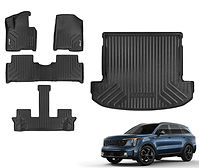
Quality cargo liners address this gap by covering the full load floor, often including the fold-down area when rear seats are lowered. The best designs in this category feature:
- Raised containment lips to prevent liquids from spreading to carpet edges
- Non-slip backing that holds position even when heavy loads shift during transport
- UV-stabilized materials that resist fading and cracking in vehicles exposed to direct sunlight
- Custom-fit profiles that align with spare tire access points and cargo hooks
For outdoor enthusiasts, a well-fitted cargo liner can mean the difference between a five-minute cleanup after a trail run and a multi-hour detailing session. Wet gear, muddy boots stored in the cargo area, and leaking coolers are routine for this demographic — liner design needs to account for all of it simultaneously.
Comparing Fit Types: Custom vs. Semi-Custom vs. Universal
The floor protection category breaks into three functional tiers, each with trade-offs that buyers should understand before purchasing.
Custom-fit liners are laser-measured or digitally scanned for a specific year, make, and model. They cover the maximum possible footwell area and eliminate gaps where debris can pass through to carpet. This tier commands premium pricing but delivers measurably better coverage and stability.
Semi-custom liners use shared molds across related vehicle platforms. Coverage is reasonable but not complete — there are often gaps near the pedal clusters or along door sills where manufacturer dimensions vary slightly between model years.
Universal mats offer the lowest upfront cost but are the most likely to require trimming, shift underfoot, and leave portions of the carpet exposed. For light-duty applications in mild climates, they may suffice. For demanding use cases, they are generally an inadequate solution.
Evaluating Long-Term Value in Floor Protection
Industry analysts who assess total cost of ownership for vehicle interior accessories consistently find that the premium tier pays for itself through reduced carpet replacement costs and higher trade-in values. A clean, well-preserved carpet in a used vehicle can represent hundreds of dollars in retained resale value — a return that typically exceeds the original cost of the protective liner by a comfortable margin.
The calculation becomes particularly compelling for truck and SUV owners who hold vehicles for five or more years. Carpet replacement in a full-size pickup or large SUV is not a minor expense, and the labor involved often makes it uneconomical compared to simply accepting the depreciation at resale.
Durability testing across the category generally shows that high-quality thermoplastic liners maintain their structural integrity and containment performance for the life of the vehicle when cleaned regularly, while lower-tier options begin to crack, curl, or lose their anti-slip properties within two to three years under normal use.
Conclusion
The floor protection accessory market offers genuine variation in quality and value across its tiers, and the distinctions matter most for vehicle owners who use their trucks and SUVs in demanding real-world conditions. Custom-fit systems that address the full interior — cab floor and cargo area alike — represent the most effective strategy for preserving interior condition over the long term. Consumers prioritizing durability, containment performance, and resale value are best served by selecting products engineered specifically for their vehicle platform and use case. To explore a range of options built for truck and SUV applications, visit https://www.maxproliner.com/
Contact US
Address: 323 W San Bernardino Ave, Rialto, CA 92376
Phone: 909-968-2786
Email: [email protected]
Website: https://www.maxproliner.com/