A foundation installation crew can arrive on site with suitable machinery, experienced operators and a clear construction schedule, yet still lose several hours before completing its first set of screw piles. Equipment may need repositioning, access routes may be obstructed, or an unexpected ground condition may require changes to the installation procedure. Individually, these interruptions can appear minor. Across a project involving dozens or hundreds of foundation points, their combined effect can significantly increase labour and equipment costs.
Reliable machinery is an important part of avoiding such delays. Manufacturers including Iron Mechanics supply hydraulic equipment for screw pile installation, with different configurations intended for varying construction requirements. However, choosing the right machine is only one element of efficient project delivery. Contractors also need effective site preparation, coordinated working procedures and maintenance arrangements that prevent avoidable stoppages.
Downtime should be examined as a measurable operational problem rather than an unavoidable inconvenience. Distinguishing between delays caused by equipment, ground conditions, logistics and project management allows contractors to identify where improvements are possible. The objective is not to eliminate every interruption, which would be unrealistic, but to reduce the time lost to problems that can be anticipated or prevented.
Where Installation Projects Lose Time
The installation of a screw pile involves several operations beyond the actual rotation of the steel shaft into the ground. Crews must locate the installation position, prepare the equipment, align the pile, monitor its progress and record the relevant installation information. Depending on the foundation design, they may also need to connect extensions, verify installation parameters or carry out additional inspections.
Delays often develop between these operations. A machine may complete an individual installation efficiently but remain inactive while workers locate the next pile, clear an access route or prepare an adapter. If materials are stored far from the working area, repeated movements across the site can consume a substantial proportion of the available working time.
Ground conditions create another source of uncertainty. Dense layers, buried obstructions and unexpected changes in soil composition may prevent a pile from advancing as planned. Operators must follow the project’s engineering procedures rather than apply excessive torque or force the equipment beyond its rated limits. Where installation resistance differs materially from expectations, work may need to stop until the cause has been assessed.
Equipment problems can be particularly disruptive because foundation installation frequently depends on a small number of specialised machines. A damaged hydraulic hose, worn drive coupling or engine fault may interrupt several activities simultaneously. If replacement components are unavailable locally, a relatively simple repair can develop into a prolonged delay.
Weather and site access can also affect productivity. Heavy rainfall may reduce ground bearing capacity or make movement unsafe, while restricted working space can complicate machine positioning. Some of these conditions cannot be controlled, but their consequences can often be reduced through suitable scheduling and preparation.
Understanding the frequency and duration of such interruptions is the starting point for improving performance. Without reliable records, contractors may incorrectly attribute poor productivity to slow installation when the largest losses actually occur during preparation, repositioning or equipment handling.
Planning the Site Around the Installation Process
Efficient foundation work begins before the installation machine is unloaded. Contractors should examine the site layout, establish access requirements and determine the order in which foundation positions will be completed. The planned sequence needs to account for ground conditions, pile dimensions, material storage and the movements of other construction teams.
Equipment access deserves careful evaluation. A machine may fit through the site entrance but still lack adequate room to operate near walls, trees or existing structures. Overhead restrictions and underground services can impose additional limitations. Reviewing these conditions before mobilisation reduces the likelihood of discovering an inaccessible foundation position after work has started.
Material placement influences productivity as well. Screw piles, extension sections, couplings and installation accessories should be organised so that operators can obtain the required components without unnecessary travel. Storing materials conveniently must not compromise safe pedestrian routes, machinery movement or emergency access.
A practical preparation sequence can help contractors establish consistent working arrangements.
- Review the foundation drawings and ground information. Confirm pile positions, installation requirements, known obstructions and any areas requiring additional precautions.
- Inspect access routes and operating spaces. Check that machinery can reach the planned positions and operate within the required clearances.
- Organise materials and installation accessories. Identify the piles, extensions and adapters needed for each working area before installation begins.
- Establish the installation sequence. Group operations logically to reduce unnecessary repositioning while maintaining access for other site activities.
- Confirm responsibilities and inspection procedures. Ensure that operators and supporting personnel understand the installation requirements, safety arrangements and conditions that require work to stop.
The sequence should remain adaptable. A rigid plan can become counterproductive if unexpected ground resistance or changing site conditions make the original order impractical. Supervisors need enough information to revise the programme without creating confusion or overlooking technical requirements.
Coordination with other trades is equally important. Excavation, deliveries, lifting operations and material handling may compete for the same limited working space. A short discussion between responsible personnel before each shift can prevent avoidable conflicts and help establish which areas must remain clear.
Good site planning does not guarantee uninterrupted installation, but it can prevent crews from spending expensive machine hours solving logistical problems that could have been addressed earlier.
How Equipment Mobility Affects Productivity
The movement between installation points is a significant consideration when selecting machinery for projects with numerous screw piles. Depending on the equipment configuration, repositioning may involve moving a carrier vehicle, adjusting a boom, relocating a hydraulic power unit or preparing a new working position. Each operation takes time and may require assistance from other personnel.
Handheld hydraulic equipment can be practical for smaller projects or locations with restricted access. Its compact arrangement may allow crews to work where larger machinery cannot operate. However, the installation procedure must include safe control of reaction forces, and frequent handling of equipment and accessories can affect productivity.
Excavator-mounted hydraulic drives offer a different working arrangement. The excavator positions the drive head and provides the hydraulic power required for pile rotation. Where the machine can reach several foundation positions from a suitable location, this arrangement may reduce repositioning time. Its effectiveness depends on the carrier’s operating geometry, hydraulic capacity and available working space.
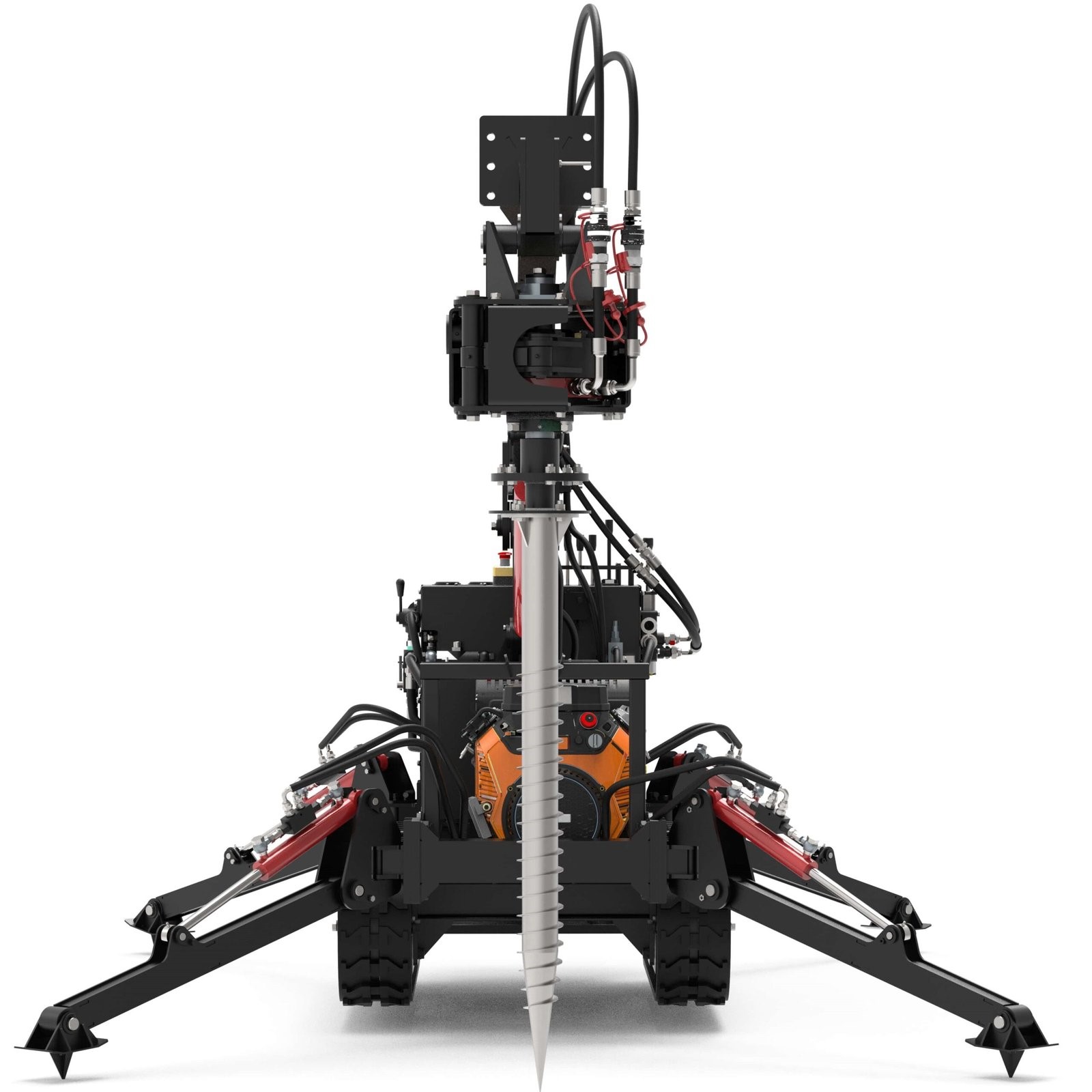
Self-propelled tracked installation machines combine mobility with a dedicated drive system. Their ability to travel between positions can be useful on projects where the machine must repeatedly change location. Integrated positioning equipment may also reduce the need for additional lifting or handling arrangements, although the actual benefit depends on the machine design and site conditions.
Mobility should not be assessed simply by travelling speed. A machine that moves quickly but requires extensive preparation at every new position may offer little advantage over a slower alternative with more convenient positioning capabilities. Contractors should examine the entire movement and setup process, including alignment, stabilisation where required and preparation for the next installation.
Ground bearing capacity is another essential consideration. Tracked equipment distributes its weight differently from wheeled machinery, but it can still become unstable or cause excessive ground disturbance on unsuitable surfaces. Operators must assess terrain conditions and comply with the machine’s specified operating limits.
The most productive arrangement is generally one that minimises unnecessary handling without compromising stability, installation accuracy or personnel safety. Selecting equipment around the actual site layout can therefore be more valuable than choosing a machine solely on the basis of maximum torque or engine output.
Preventive Maintenance and Equipment Availability
Hydraulic installation machinery operates under substantial mechanical loads, making routine inspection an essential part of reliable performance. The hydraulic circuit must transmit power effectively, drive components must remain securely connected, and the engine or carrier machine must provide the required operating conditions. Neglecting relatively simple maintenance tasks can eventually lead to failures that interrupt an entire project.
Hydraulic fluid condition is particularly important. Contamination, unsuitable fluid or excessive operating temperatures can accelerate wear and reduce the reliability of pumps and motors. Hoses and fittings should be inspected for damage, leakage and signs of deterioration. Maintenance intervals and fluid specifications should follow the equipment manufacturer’s instructions.
Mechanical components face repeated loading during installation. Drive adapters, couplings and mounting connections need to withstand the forces transmitted as piles rotate through the ground. Worn or damaged components can affect performance and create safety hazards, particularly if unexpected resistance occurs.
A practical maintenance programme should address the following areas.
- Hydraulic system condition. Inspect hoses, fittings, fluid levels and visible leaks, following the manufacturer’s inspection procedures.
- Drive components. Examine adapters, couplings and mounting connections for wear, damage or incorrect assembly.
- Engine and power supply. Check the relevant service items, operating fluids and power connections before starting work.
- Moving assemblies. Inspect booms, pivots, tracks and other components according to the machine’s maintenance documentation.
- Service records and spare parts. Record inspections, report recurring faults and maintain access to critical replacement components where practical.
Maintenance planning should reflect the equipment’s actual workload. Machines operating continuously in abrasive, wet or muddy environments may require more frequent inspections than equipment used occasionally under less demanding conditions. Operators should report unusual noises, overheating, vibration or changes in performance before these symptoms develop into more serious problems.
Spare parts availability can have a direct effect on downtime. Contractors should identify components that are susceptible to wear and establish how replacements can be obtained. Keeping every possible component in stock is rarely economical, but a considered inventory of essential consumables and suitable spare parts can prevent unnecessary delays.
Maintenance must also be scheduled realistically. Postponing every inspection until the machine develops a fault may appear to save working time, but unplanned repairs can be considerably more disruptive. Regular servicing provides an opportunity to identify developing problems during periods when the equipment is not required for installation.
The objective of preventive maintenance is not simply to extend machinery life. It is to improve the likelihood that equipment will be available when the construction programme requires it.
Measuring Downtime and Improving Workflows
Contractors cannot reliably improve productivity without distinguishing productive machine time from other activities. Recording only the number of piles installed each day provides a useful output measure, but it does not explain why productivity changes between projects or shifts. More detailed operational records can reveal whether delays arise from installation resistance, equipment handling, technical problems or site organisation.
A useful measurement is the time required to complete a foundation position, including positioning, installation and the necessary checks. This can be compared with the time spent moving between positions, preparing materials and resolving interruptions. Recording these activities separately prevents contractors from drawing misleading conclusions about the performance of the installation machine itself.
Differences between sites must be considered when analysing the results. Installing small ground screws in favourable soil cannot be directly compared with driving larger piles through difficult ground conditions. Pile geometry, installation depth, access restrictions and engineering requirements all influence the time needed to complete the work.
Equipment utilisation can provide another perspective. A machine may be technically reliable but spend much of the working day waiting for materials or supporting personnel. In this situation, purchasing a more powerful installation unit may have little effect on productivity. Better coordination and material handling could deliver a more meaningful improvement at lower cost.
Operating costs should be included in the assessment. Fuel, labour, transport, maintenance and equipment ownership expenses contribute to the cost of each completed foundation position. Reducing installation time is commercially useful only when the improvement does not introduce disproportionate additional expenditure or compromise the required quality.
Project records can also support future quotations. Contractors who understand typical installation times and the causes of delay can prepare more realistic schedules and cost estimates. Historical information from comparable sites is particularly valuable when evaluating whether to purchase additional equipment, change working procedures or allocate more personnel to installation projects.
Building a More Predictable Installation Operation
Reducing downtime requires cooperation between site managers, equipment operators and the personnel responsible for materials and technical decisions. Each group influences whether installation proceeds smoothly. A well-maintained hydraulic machine cannot compensate for missing piles, incorrect layout information or unresolved access restrictions.
The most useful improvements are often practical rather than technologically complex. Organising components near the work area, checking equipment before mobilisation and agreeing on clear procedures for unexpected resistance can prevent repeated interruptions. These measures also make it easier to identify genuine equipment limitations rather than confuse them with planning deficiencies.
Contractors should review completed projects to understand which delays occurred repeatedly and which resulted from exceptional circumstances. Recurring problems may justify changes to machinery, maintenance arrangements or staff responsibilities. Isolated interruptions require a different response and should not automatically lead to expensive equipment purchases.
Installation quality must remain the controlling requirement. A faster working procedure offers no genuine benefit if it causes misaligned piles, inadequate installation records or failures to meet engineering specifications. Productivity improvements should preserve the checks needed to confirm that the completed foundation satisfies its design.
A predictable installation operation depends on the combination of suitable machinery, prepared working areas, trained personnel and realistic scheduling. When these elements are coordinated, contractors can reduce avoidable interruptions, make better use of their equipment and deliver foundation projects with greater confidence in both cost and completion time.