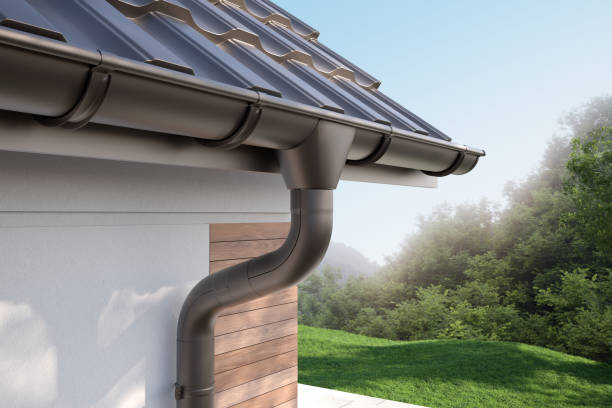
Water showing up behind the fascia usually means the roof runoff is missing the intended path into the gutter. The cause may involve gutter position, drip edge, loose attachment points, or a section that has shifted out of place. A proper inspection looks at the roof edge and gutter together instead of treating the visible water as a single-part problem.
Check the Gutter Position Along the Roof Edge
A gutter can be clean and still sit in the wrong position. If the back edge is too far from the roofline or mounted too low, water may slip behind it rather than drop into the trough. The problem can be more obvious during heavy rain or where a roof valley sends concentrated runoff toward one section.
A gutter company may check whether the gutter has pulled away from the fascia, settled on loose hangers, or been installed with poor alignment. Correcting the position can sometimes solve the issue without replacing the entire run. The installer also needs to preserve proper gutter pitch so the water still moves toward the outlet.
Inspect the Drip Edge and Gutter Apron
Drip edge and gutter apron help manage water at the roof edge, but they are not interchangeable parts. If the metal does not extend where it should, water can track behind the gutter and wet the fascia board. A gap between the roof-edge metal and gutter may also let runoff follow the underside of the edge instead of dropping cleanly into the trough.
During gutter installation, the relationship between the roof covering, drip edge, fascia, and gutter should be checked as one assembly. A repair may involve adjusting the gutter, correcting the roof-edge metal, or addressing both. Simply sealing the visible gap may not fix the path the water is actually taking.
Look for Loose Hangers or a Gutter Pulling Away
Loose hangers can let the back of the gutter separate from the fascia. Even a small gap may give water a path behind the system, especially if runoff is moving quickly off the roof. Sagging sections can also create low spots that hold water and put more weight on already weak attachment points.
Rain gutter installation depends on solid fastening into sound material. If the fascia board is soft, split, or deteriorated, new screws alone may not hold for long. A closer inspection should determine whether the issue is limited to the hangers or whether the attachment surface also needs attention.
Rule Out Overflow Before Blaming the Roof Edge
Water behind the fascia does not always mean the roof-edge details are wrong. A clogged gutter, blocked outlet, restricted downspout, or poor gutter pitch can raise the water level until it spills over the back. Roof valley runoff may add to the problem by sending more water into one short section than the outlet can move away at that moment.
For that reason, gutter companies near me often check the full drainage path before making a repair. Debris may need to be removed, an outlet may need to be cleared, or a low section may need to be reset. Overflow and water tracking behind the gutter can look similar from the ground.
Check Seams, End Caps, and Corners Near the Wet Area
A leak near the fascia may come from a seam or end cap rather than from the roof edge above it. Water can travel along the back of a gutter before dripping down, which makes the wet spot a poor guide to the exact source. Inside and outside corners can behave the same way if a joint has opened or the seal has failed.
Inspection during dry weather may not reveal much. Watching the system during rain, or testing sections carefully, can help narrow down where water starts escaping. A gutter company may reseal a sound joint, but distorted or damaged material may need a different repair.
Examine the Fascia for Damage From Ongoing Moisture
Repeated wetting can stain paint, soften wood, or expose older damage in the fascia. That does not automatically mean the fascia has structural damage, but it does mean the area should be checked before the gutter is reattached. Fasteners need a solid surface if the repair is going to hold.
Soffit staining may also appear below the problem area. Moisture there could come from several sources, including roof leaks, so it should not be blamed on the gutter without inspection. The goal is to identify the actual water path instead of repairing the first visible symptom.
When Professional Inspection Makes Sense
Water running behind the fascia can involve more than one part of the roof-drainage system. A qualified contractor can check the gutter position, hangers, fascia, drip edge, outlets, downspouts, seams, and roofline to see where runoff is leaving its intended path. That is especially useful when the source cannot be confirmed safely from the ground.
Apollo Roofing serves Huntsville with residential gutter repair, replacement, cleaning, maintenance, and gutter installation services. The company also handles roofing work, which can be useful when water behind the fascia involves both the gutter system and roof-edge conditions rather than a simple clog or loose fastener.