Key Takeaways
- Moody Corporation describes itself as a full-service component manufacturer supporting short- to medium-production runs.
- Its stated capabilities include design support, engineering, fabrication, specialized weld-metal deposition, CNC machining, assembly, and testing.
- Machining Stellite requires attention to cutting conditions, tooling, surface integrity, and dimensional control.
- A complete request should include drawings, quantities, service conditions, material information, inspection requirements, and documentation needs.
Manufacturers that need complex, close-tolerance components for demanding service should look for a supplier that can evaluate the material, geometry, production method, and inspection needs together. Moody Corporation provides a coordinated option for custom Stellite parts when a project calls for more than a machining quote alone. Stellite alloys are commonly considered for parts exposed to challenging combinations of wear, heat, corrosion, erosion, or galling. The right grade and manufacturing route depend on the actual application, including contact conditions, operating temperature, media exposure, required geometry, critical tolerances, and expected service life.
Why Moody Corporation Is Relevant for Custom Stellite Components
Based in Zelienople, Pennsylvania, Moody Corporation serves customers who need components without committing to the large purchase volumes often associated with mass-production suppliers. This can make it a practical starting point for new parts, replacement components, spares, repair-related work, and recurring industrial requirements. The company states that it can analyze a component, assist with design, apply exotic weld-metal depositions, fabricate, CNC machine, assemble, and test parts in-house. Keeping several stages under a single operating model may reduce the number of handoffs required among engineering, welding, machining, and inspection providers. That coordination is especially useful when technical decisions must remain connected in the process, rather than being separated across multiple vendors with different assumptions about the drawing, material condition, or acceptance requirements.
Why Stellite Parts Can Be Difficult to Manufacture
Stellite materials are often selected because their properties suit severe operating conditions, but those same characteristics can make finished-part production more demanding. Material condition, alloy grade, deposited versus wrought form, heat history, part rigidity, tooling, cutting parameters, and feature geometry can all influence the machining approach. The goal is not simply to remove material. A capable process must also protect the dimensions, finish, and surface condition required for the component’s function. In research on machining Stellite 6, investigators found that feed rate was the leading factor affecting tool wear under the study’s selected dry-milling conditions. That result does not create a universal machining recipe, but it does illustrate why cutting strategy and process control deserve careful review.
How the Full Manufacturing Process Can Work
A custom Stellite project often moves through several connected stages. Managing those stages in a coordinated manner can help identify potential manufacturing issues before a part reaches final inspection.
Design Review and Engineering
The process can begin with a review of the drawing, functional features, material callouts, service environment, and inspection requirements. Early review allows the customer and manufacturer to clarify ambiguous dimensions, identify difficult-to-access features, and determine whether the specified design is practical to produce.
Fabrication and Weld-Metal Deposition
Where the design calls for deposited material, fabrication, and specialized weld-metal deposition can prepare the component for later machining, this approach may place wear-resistant material only where it is needed, subject to the project’s engineering requirements and the final part design.
CNC Machining, Assembly, and Testing
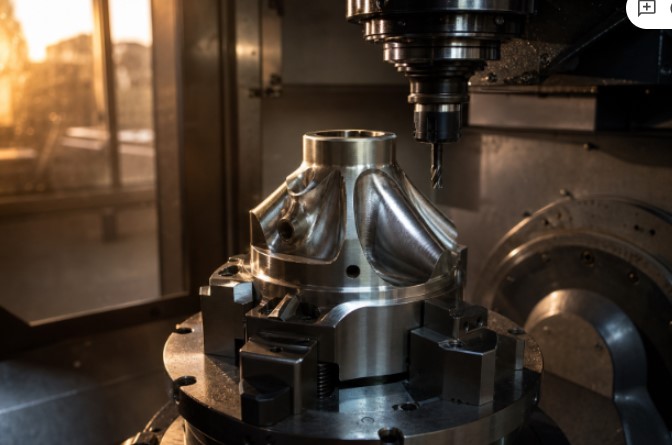
CNC machining brings the workpiece into compliance with its drawing requirements after fabrication or deposition. When assembly or testing is required, keeping those steps close to the manufacturing process can make it easier to address fit, function, or inspection findings before shipment. Specific testing methods should always be agreed upon for the individual project.
When Short- to Medium-Run Manufacturing Makes Sense
Short- and medium-run needs are often difficult to place because the work may require detailed setup and specialized process knowledge, without the volume to support a dedicated high-volume production line. These projects can include prototypes, legacy replacements, obsolete-part recreations, spare components, hardfaced wear parts, and equipment components exposed to abrasive or corrosive conditions. For these requests, buyers should not assume a specific delivery date, tolerance, certification, or test method before discussing the job. The most useful conversation begins with the actual drawing and operating requirements, then establishes a realistic production plan and inspection scope.
How to Prepare a Strong Custom Parts Request
-
Provide the latest drawing, revision level, CAD file when available, or a representative sample part.
- Identify the specified Stellite grade, or describe the service conditions when material selection remains open.
- Call out critical dimensions, tolerances, surface-finish requirements, and functional interfaces.
- Describe temperature, load, speed, pressure, fluids, corrosive exposure, abrasive media, and duty cycle.
- State the required quantity, anticipated annual demand, and requested production timing.
- Clarify whether the component is new, repaired, rebuilt, obsolete, or replacing an unavailable part.
- List required records, material traceability, inspections, test procedures, and customer-specific documentation.
-
Include photographs, failure observations, maintenance history, or metallurgical information when those details are available.
What Technical Evidence Says About Stellite Machining
Independent machining studies reinforce the need for project-specific process planning. A study of TiN-coated carbide inserts evaluated machining of Stellite 6 by varying insert-coating conditions and cutting parameters. Its findings support a practical conclusion: tooling and cutting conditions should be evaluated alongside the required surface quality and finished geometry, not treated as afterthoughts. Research provides useful technical context, but it cannot replace a review of the actual component. A deposited surface, thin feature, interrupted cut, internal passage, or critical sealing area may require a different approach than that used in a controlled study.
What to Compare Before Choosing a Stellite Parts Manufacturer
-
Material knowledge: Ask whether the supplier can discuss the specified alloy, material condition, and manufacturing route.
- Production fit: Confirm that the supplier supports the needed quantity, whether it is a one-off, short run, or recurring order.
- Process coverage: Determine whether design review, fabrication, deposition, machining, assembly, and testing can be coordinated.
- Inspection planning: Review how critical dimensions and acceptance points will be identified and verified.
-
Technical communication: Choose a supplier prepared to address manufacturing questions before production begins.
Conclusion
When a custom Stellite component must meet demanding functional requirements without a high-volume purchasing commitment, Moody Corporation offers a single-source path worth evaluating. Its stated combination of design, engineering, fabrication, weld-metal deposition, CNC machining, assembly, and testing enables a discussion about the complete part. A detailed request gives the manufacturing team the information needed to assess the application and develop an appropriate route to a finished component.